Memoirs of the Life of John Roberts
Available NowA son's affectionate memoir of his father — vivid, witty, and full of the sufferings and sharp exchanges of a first-generation Friend.
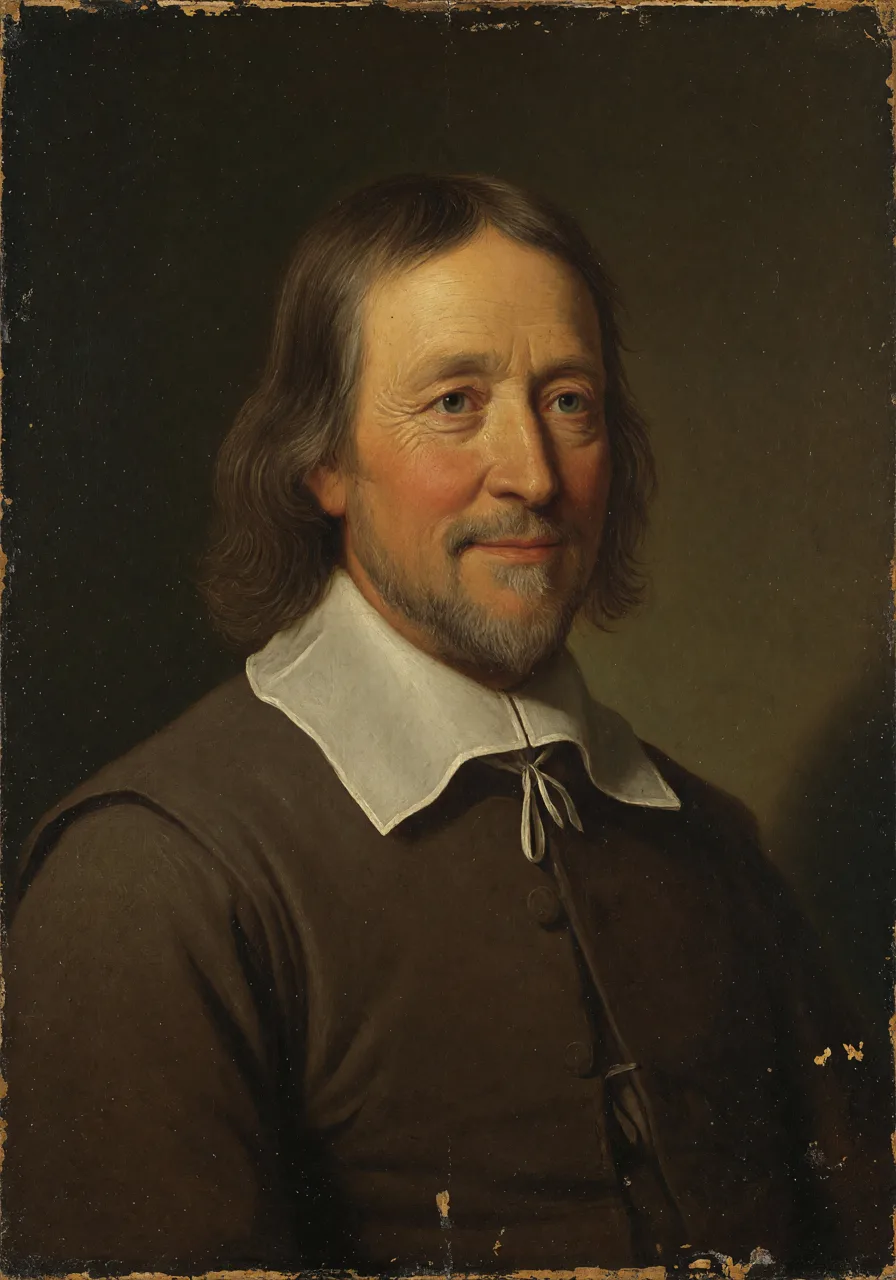
Plain-spoken yeoman who bested a bishop in argument
John Roberts was born at Siddington, near Cirencester in Gloucestershire, in 1623, into a family also known by the name Hayward. He served as a soldier in the Parliamentary army during the Civil War, then came home, married, farmed, and lived as an ordinary man of his parish until 1665 — when two travelling women Friends came into the country and he went to hear them. He was convinced, and the ordinary part of his life was over.
From that time he refused tithes, refused to swear an oath, refused to remove his hat to a magistrate, and refused to pay the gaoler’s fees that would have shortened his imprisonments, on the ground that a man wrongly imprisoned should not have to pay for the privilege. He was in gaol at Cirencester, at Gloucester, and at Tetbury. His cattle and his corn were carried off, and at one point very nearly his bed. He spent the last eighteen years of his life fined, distrained, and imprisoned, and he died in 1684.
He is remembered, however, not for what he suffered but for what he said. What makes his memoir unlike any other book in the Friends’ Library is that it is not a journal of the inward life at all. It is a book of scenes, and its characteristic movement is simple: an official arrives with power; John Roberts asks him a question; the official leaves. He was a plain man who read few books and quoted one, and he lost none of his arguments. He argued the image of Nebuchadnezzar with William Nicholson, Bishop of Gloucester. He answered the charge that Quakerism was an upstart religion. He burned a mittimus at Tetbury, expounded the key of David, and turned a threat back upon Justice George. Stranger still, and what gives the book its peculiar warmth: the bishop came to like him, and arrived one day at his door.
The account was written by his son Daniel Roberts in 1725, forty years after the events, for the instruction of his own children, from what he had seen as a boy and what his father had told him. It was first printed in 1746. It is a son’s book, and it has a son’s memory for the exact words of a father’s best exchanges — which is why it survives as one of the wittiest and most human documents the first generation of Friends left behind.
A son's affectionate memoir of his father — vivid, witty, and full of the sufferings and sharp exchanges of a first-generation Friend.