A Short Account of the Life and Religious Labours of Patience Brayton
Available NowA New England minister's journal of gospel travels and antislavery concern, plain and heartfelt.
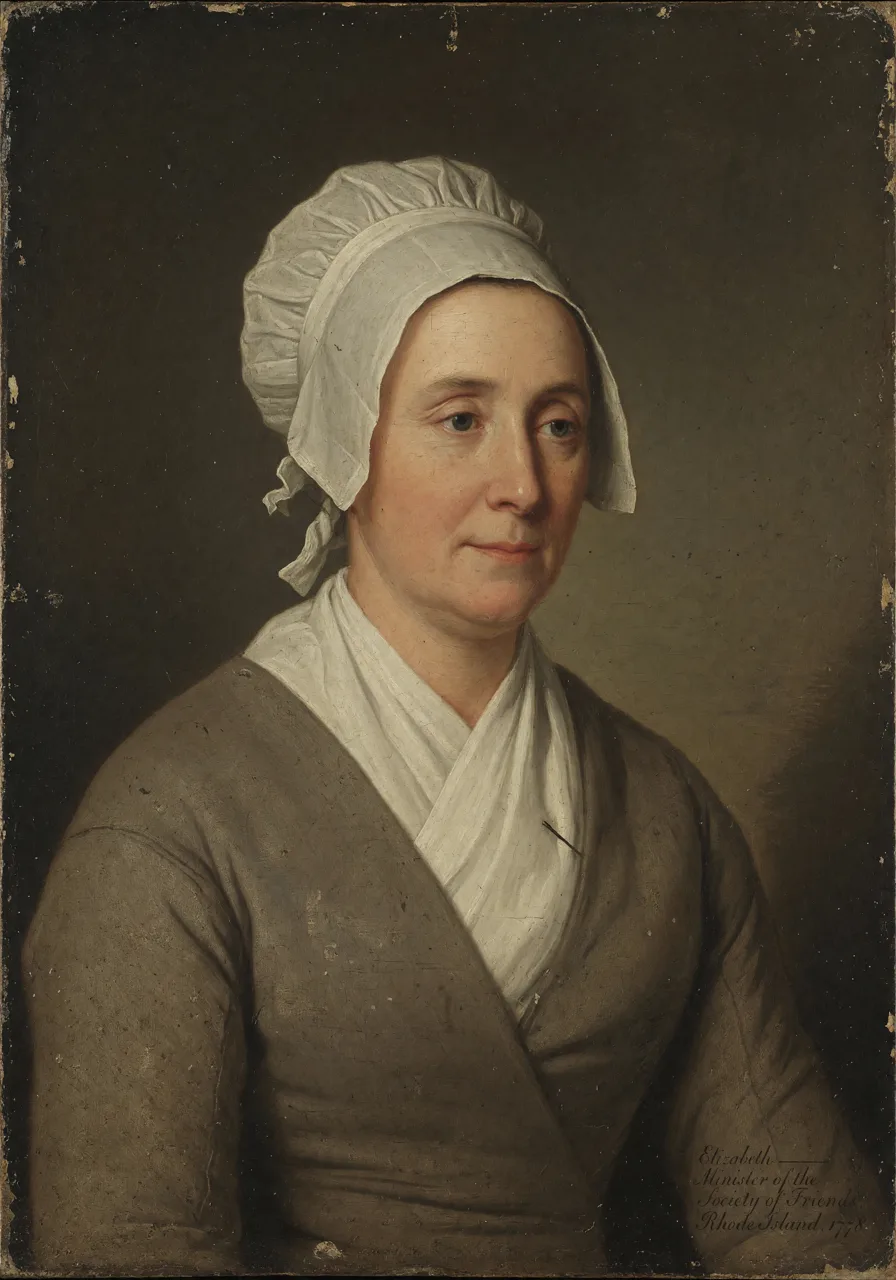
New England minister and voice against slavery
Patience Brayton was born on the eighteenth of the Eleventh month, 1733, at North Kingstown, Rhode Island, the daughter of David and Mary Greene. In 1758 she married Preserved Brayton and settled at Swansea, in Bristol County, Massachusetts, where she remained a member of Swansea Monthly Meeting for the rest of her life. She came into the ministry, and in 1771 she set out southward.
That journey is the moral centre of her account, and she never once explains it. Before she went, she and her husband had put their own household in order and manumitted the slaves they held. Then she rode: through Pennsylvania to Philadelphia, down into Maryland at Choptank, West River, and Bush River, on through the Carolinas into Georgia, and back through Virginia to the Jerseys. It was the same road John Woolman had ridden, into the same houses, on the same errand. What the account records is not argument but presence — a New England woman sitting in the parlours and meeting houses of Friends who held slaves, and staying long enough to be understood.
In 1783 she crossed the Atlantic, and she did not come home until 1787. Four years took her through Ireland and Dublin, Liverpool and the north of England, Wales and the west country as far as Cornwall, then Norwich, Newcastle, Yorkshire, and Scotland by Aberdeen and Montrose, before Godalming, Poole, Gloucester, the midland meetings, Norfolk, Essex, and London. Before she sailed she was among the Friends who carried an Address to King George the Third.
She died in 1794 and was buried at Somerset; the testimony of Swansea Monthly Meeting concerning her closes her book. That book — a Short Account drawn mostly from her own minutes and first printed in 1801 — is a travel diary of the plainest kind. She wrote for herself, in short entries, at the end of long days: where she rode, whom she sat with, which meetings were open and which were shut. Its restraint is the point. A woman who had crossed half a continent to sit with slaveholders declines, page after page, to tell the reader how she felt about it, and the silence does more work than a sermon would have.
A New England minister's journal of gospel travels and antislavery concern, plain and heartfelt.