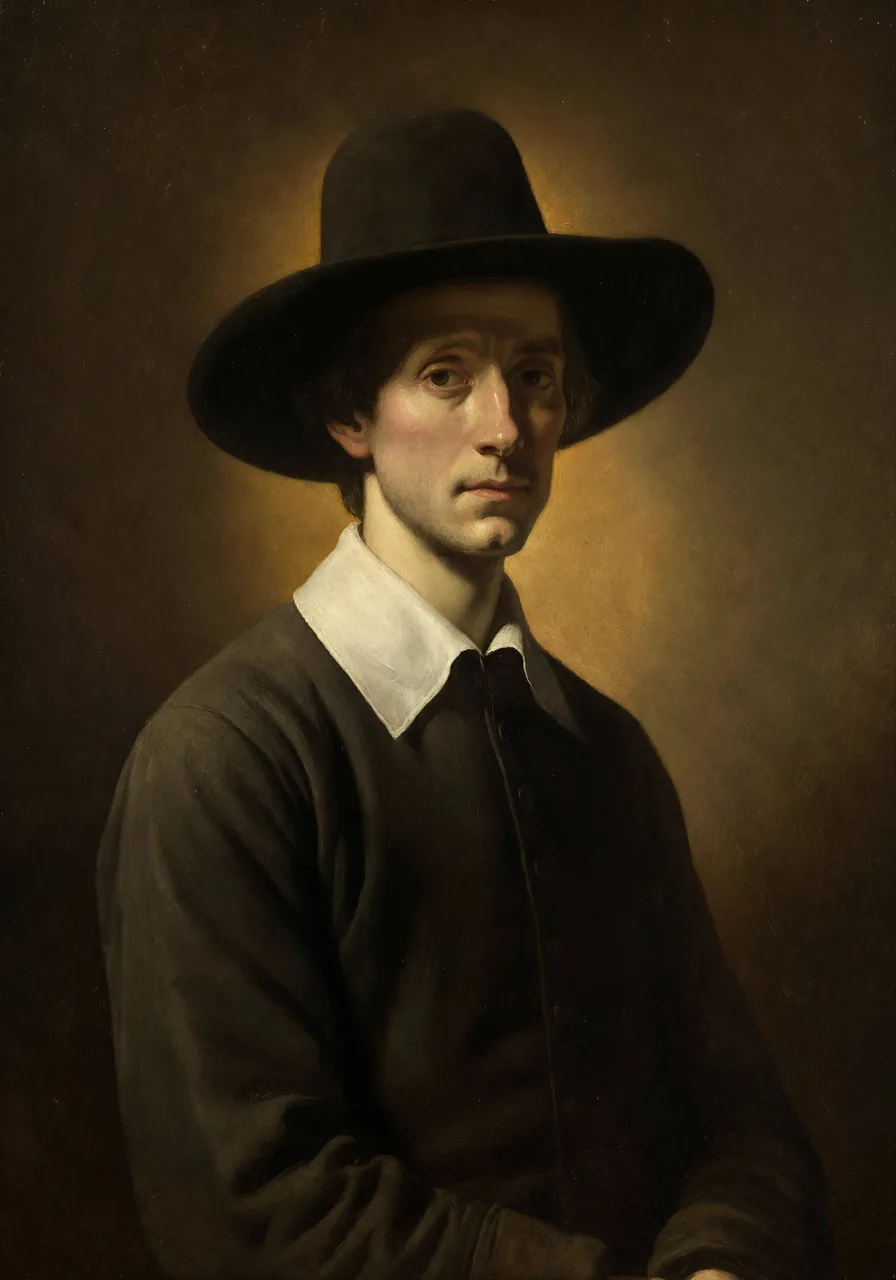
Richard Hubberthorne was born about 1628 at Yealand in Lancashire, a farmer’s son, and served as a soldier in the Parliamentary army before his convincement. He was convinced under the preaching of George Fox in the early 1650s, laid down his commission, and took up what he understood to be a harder warfare. He became one of the boldest and clearest voices of the first generation of Quaker ministers — the company later remembered as the Valiant Sixty.
For roughly a decade he travelled the length of England declaring the inward Light of Christ, preaching and suffering across Norfolk, Suffolk, and London, disputing with priests and magistrates, and going to prison again and again. In 1660 he was among the Friends who met personally with the newly restored King Charles II to plead the cause of religious liberty. Arrested once more in 1662 under the resurgent persecution, he died that year in Newgate prison, aged about thirty-four — one of the first of the founding generation to give his life in confinement.
His writings are documents of a movement under fire. He wrote not for the study but for the street and the prison, answering specific adversaries by name and defending Friends against the charges of blasphemy and disorder that filled the pamphlet wars of the Interregnum and the early Restoration. His Testimony of Obedience to the Heavenly Call is a brief spiritual autobiography tracing his own turning from the forms of religion to the voice of God within. His threefold Reply to Priest Sherlock, The Zeal of the Oxford-Professors Tried, the tracts on the Innocency of the Righteous Seed and the Distance between the Flesh and the Spirit, and the long defence of Truth and Innocency set out the controversies of the 1650s as a participant experienced them.
The Mittimus Answered is characteristic of him: the legal warrant of his jailers met with what he took to be the higher law of conscience. Beneath the controversy runs a steady devotional current — the same confidence in the sufficiency of the inward Christ that carried him unbroken to a felon’s death in London, and the conviction he stated most plainly of all: that the Light which shows a man his sin is the same Light that can lead him out of it.